 Turn Key Tanks
 Concrete Built
 Acrylic Panels
 Artificial Rock
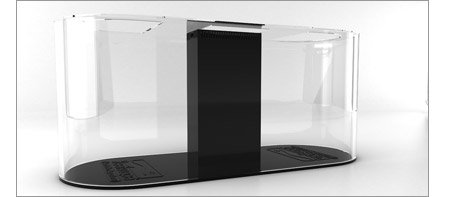
Turn Key Tanks. Read More
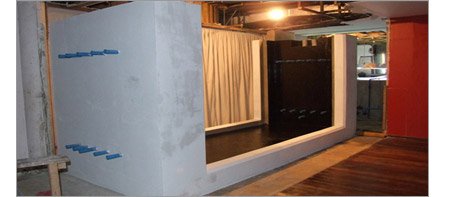
Concrete Tanks. Read More
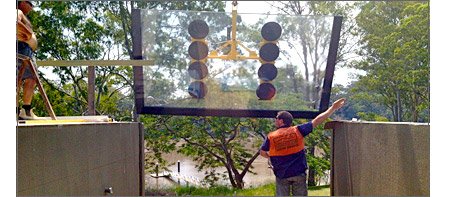
Acrylic Panels. Read More
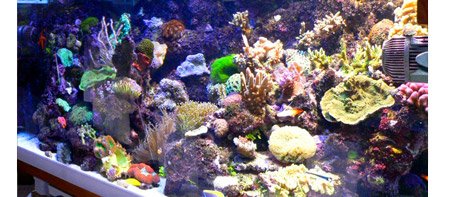
Artificial Rock. Read More
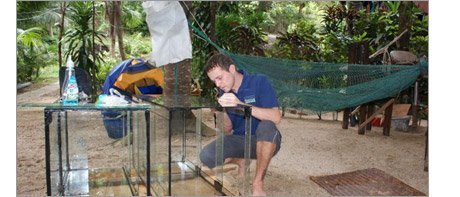
Test aquarium sump tanks under construction in the jungle.
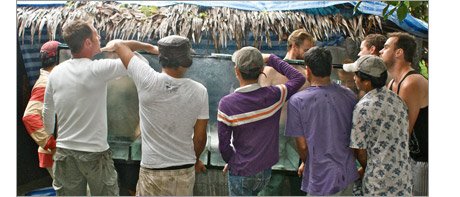
Thailand staff and volunteers lift the aquarium tank onto its support structure.
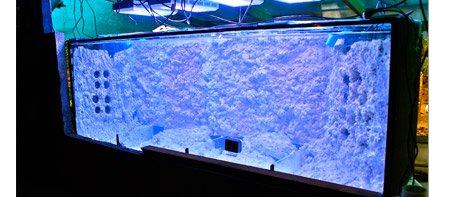
The Coral Alive test aquarium lined with artificial live Reefscape Rock™ is left to cycle before stocking can begin.
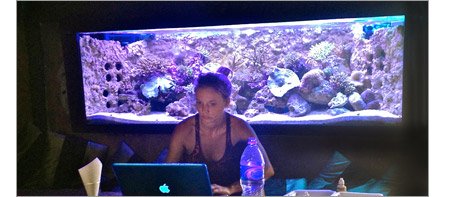
Water is tested in a specially constructed reef aquarium. The tank is used as a controlled environment from which comparisons are made to in-sea conditions and their effects on coral growth rates.Show me more about this build on Facebook
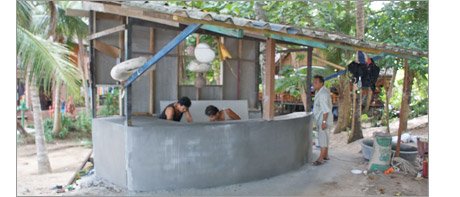
A coral replantation and diving outpost was constructed to provide on-shore support to in-sea activities. Show me more about this build on Facebook
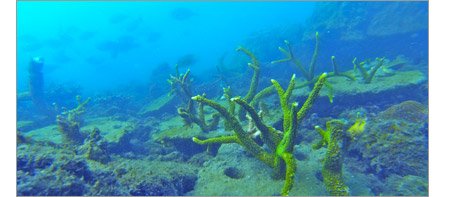
Stag horn coral was planted into concrete holders for latter replantation.
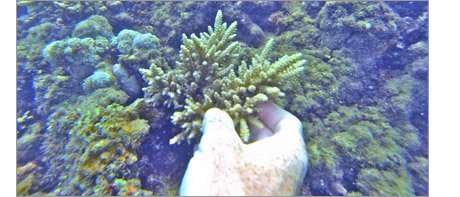
Coral frags being planted into dead reef behind. Show me more about this build on Facebook
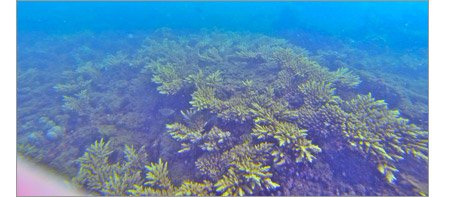
Test section, replanted 2 years prior during site testing, showing vigerous coral growth. Show me more about this build on Facebook
Coral Alive — Marine Restoration Program, Thailand
Location: Haad Tien Bay, Koh Phangan & Andaman Sea Research Center, Phuket, Thailand
Role: Founder, Design, Build, Coral Restoration / Expert Assessor
Years: 2012—13 / 2019
Program: Coral Alive — privately funded not-for-profit
Some aquarium companies sell plastic artificial rock as an environmentally friendly product. Others run coral propagation programs from the comfort of a controlled facility. Few actually get in the sea.
Reefscape got in the sea.
Coral Alive — Haad Tien Bay, Koh Phangan, Thailand, 2012—13
When Reefscape was engaged on a project on Koh Phangan in 2012, the island’s fringing coral reefs were in severe decline — up to 70% damaged by a combination of environmental and human pressures. Reefscape responded by founding Coral Alive — a privately funded not-for-profit reef restoration program — and committing hundreds of man hours, materials and expertise to the problem at no commercial return.
The location chosen for the pilot program was Haad Tien Bay — a remote stretch of coastline accessible only by 4WD over jungle terrain, with no mains electricity and no road infrastructure. Everything — the test aquarium, the equipment, the in-sea support structures — was hauled in overland and built on site. Power came from a diesel generator.
Thai conservation law does not permit coral of any type to be removed from the sea. Reefscape developed in-sea coral fragging techniques — propagating coral cuttings without removing them from the water — that achieved meaningful reef restoration in full compliance with Thai law. The techniques were adapted from aquarium coral propagation methods and successfully transferred to the open marine environment.
Reefscape Rock™ was deployed as the primary substrate for the in-sea restoration structures. The two-year program confirmed in open water what Reefscape’s aquarium installations had long demonstrated: coral fragments attached and grew, and the structures became progressively richer over time.
Two years after initial planting, the replantation area showed meaningful coral recovery — documented in photographs that remain part of Reefscape’s project archive.
DMCR Invitation — Andaman Sea Research Center, Phuket, 2019
In 2019 Reefscape was invited by Thailand’s Department of Marine and Coastal Resources to join their team at the Andaman Sea Research Center in Phuket — to assess the suitability of coral restoration structures designed for a project of national importance under the patronage of HRH Princess Sirivannavari Nariratana.
The assessment focused on evaluating coral ball structures — concrete sphere forms designed to support baby coral planting — provided by the Princess’s project for deployment across the Andaman Sea. Reefscape’s role was to assess their biological and structural suitability before deployment.
The assessment identified significant technical concerns. The coral balls as designed required extended underwater conditioning before coral could be successfully installed — and if baby corals were planted before the structures were biologically ready, mortality would be high. Reefscape communicated these findings honestly to the DMCR team.
That willingness to deliver an honest technical assessment of a high-profile royal project — rather than the answer people wanted to hear — reflects the same approach Reefscape brings to every consultation engagement. The DMCR’s decision to invite Reefscape to that assessment reflects the relationship and credibility that the Coral Alive program had established.
The Question That Remains Open
The Coral Alive pilot study demonstrated that Reefscape Rock™ performs in open marine conditions, not only in aquaria. The DMCR engagement confirmed that Thailand’s government agencies recognise Reefscape’s specialist knowledge and are prepared to work with them on reef restoration at a national level.
What a properly scaled, properly funded marine restoration program using Reefscape Rock™ could achieve — across the degraded reef systems of the Gulf of Thailand and the Andaman Sea — remains an open question. One Reefscape intends to answer.