 Turn Key Tanks
 Concrete Built
 Acrylic Panels
 Artificial Rock
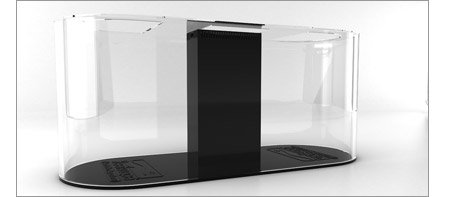
Turn Key Tanks. Read More
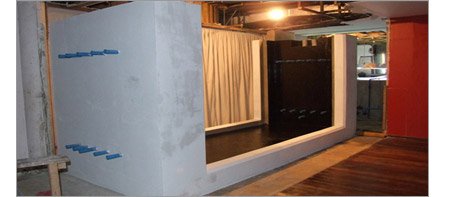
Concrete Built. Read More
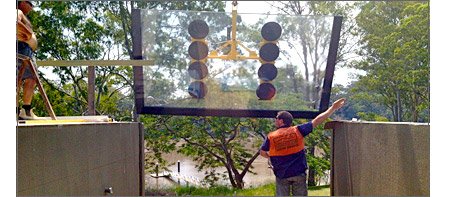
Acrylic Panels. Read More
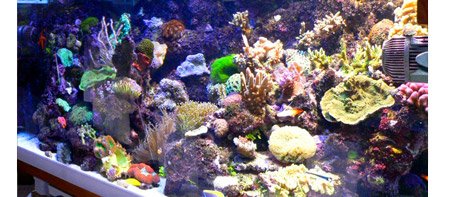
Artificial Rock. Read More
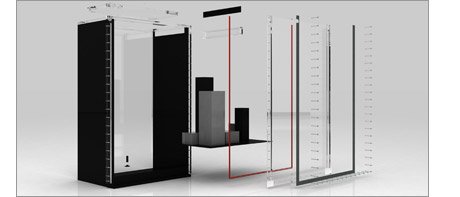
Bee Lucky concept render — the 12-metre twisted helix rising through the lobby atrium.
Hexagonal structural segment — 45mm sided hexagons separated by 15mm walls.
Reefscape Rock™ — the proprietary substrate at the heart of the Bee Lucky design.
Bee Lucky
Cabravale Diggers Club, Sydney, Australia — 2021
Location: 1 Bartley Street, Canley Vale, Sydney NSW, Australia
Client: Cabravale Diggers Club
Role: Concept and Design Development
Year: 2021
Status: Unbuilt
Height: 12 metres across three floors
Some designs don’t get built. This is one of them — and it is worth documenting precisely because of what it reveals about what is possible when aquatic design, biological engineering and cultural intelligence are brought together from first principles.
Bee Lucky was conceived for the reception lobby of Cabravale Diggers Club in Sydney’s Cabramatta — a venue primarily serving the Vietnamese and Chinese community, where feng shui, water, lucky numbers and the symbolism of prosperity are not decorative considerations but genuine design requirements. The brief was precise: a 12-metre aquatic environment spanning three floors of an atrium, active 24 hours a day, always fresh, always engaging, always meaningful to the people who encountered it.
Every decision in the design carried cultural weight.
The Concept
The form was a money tree — the Chinese symbol of abundance, nobility and auspiciousness. A 6-point twisted helix rising 12 metres from the lobby floor to the third-floor atrium, its structure referencing the honeycomb of the bee — producer of honey, symbol of wealth, energy and prosperity. The hexagon, present in every structural segment, symbolises all six directions in traditional Chinese literature: North, South, East, West, Heaven and Earth. Completeness. Infinite life. Higher wisdom.
The number 6 — in Cantonese, “good fortune”; in Mandarin, “fulfilment” and “completeness” — determined the number of helix points. The number 8 — the luckiest number in China, associated with wealth and the rapid accumulation of fortune — determined the degrees of rotation between each structural segment. The sculptural inspiration was Tony Cragg, one of the world’s most significant living sculptors.
Nothing was arbitrary. Everything meant something.
The Engineering
The structure was a stacked helix — each segment a 50mm central ring with an internal diameter of 600mm, connected by 45mm sided hexagons separated by 15mm walls, with 11mm diameter penetrations placed at 8 degrees from the central axis. Segments were designed to be manufactured using a concrete 3D printer — the first application of 3D printed in an aquarium environment anywhere in the world.
Each completed segment could be dressed with coral inserts on removable pegs and lowered over the central overflow chimney. Coral could be cleaned outside the tank without complete disassembly. Diver time in a 12-metre deep structure was reduced to a minimum.
At the base of the structure, compressed air introduced at the lowest point drove bubbles upward through the entire helix — dislodging accumulated detritus and delivering it passively to the overflow channel. The structure cleaned itself.
The Biology
Conventional cylindrical aquarium rockwork is fibreglass — decorative, and degrading over time. The AquaDom in Berlin — the largest cylindrical aquarium ever built — ruptured catastrophically in December 2022, sending one million litres of water and 1,500 fish into the hotel lobby. A vertical garden now stands in its place.
Bee Lucky was designed around Reefscape Rock™ — Reefscape’s proprietary substrate — in place of conventional fibreglass rockwork. The environment was designed to improve with time rather than degrade from it.
The structure was designed to get better every year it stood.
Why It Was Never Built
The principal wanted it built. The design had reached full concept development stage and was ready to proceed. What stopped it was construction politics — a principal contractor managing his risk profile who made structural changes to the building that progressively edged the aquarium out of the brief. The person who commissioned the design never stopped wanting it. The person who controlled the construction site found ways to make it impossible without ever saying no.
It is a story familiar to anyone who has worked at the intersection of extraordinary design and conventional construction. The most ambitious briefs are also the most vulnerable to the people who benefit from simpler outcomes.
A Design Methodology, Not a Fixed Design
Bee Lucky was conceived for a specific cultural brief — Chinese. The underlying design language is completely reinterpretable. The hexagon is one of the most sacred geometric forms in Islamic art and architecture, present from the Alhambra to the Sheikh Zayed Grand Mosque. Water as paradise, abundance and divine creation runs as deep in Arab culture as prosperity runs in Chinese culture.
The form changes. The cultural references change. The biological system, the self-cleaning, the improving-over-time characteristic — these are constants.
Nothing like Bee Lucky has ever been built. If you are the client who changes that — the conversation begins with a call.