
 Turn Key Tanks
 Concrete Built
 Acrylic Panels
 Artificial Rock
Turn Key Tanks. Read More
Concrete Tanks. Read More
Acrylic Panels. Read More
Artificial Rock. Read More
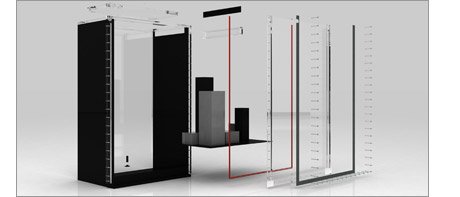
The tank concept was designed in 3D to ensure all parts were accounted for.
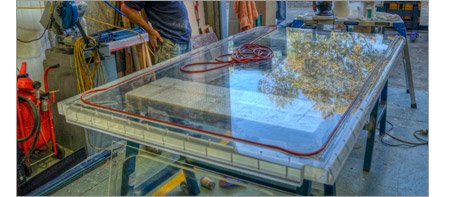
Silicone O-ring seals fitted to the 70mm thick acrylic door.
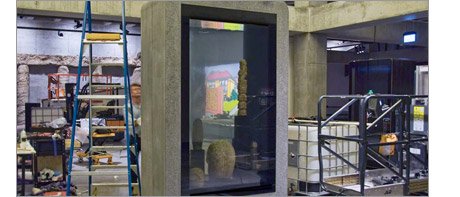
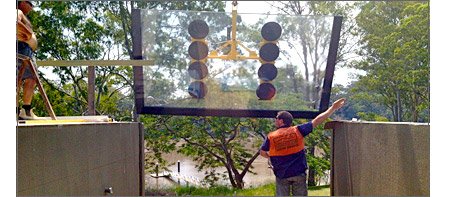
The tank during installation at MONA, Hobart.
Underwater Wunderkammer
Museum of Old and New Art, Hobart, Australia — 2011
Location: MONA — Museum of Old and New Art, Hobart, Tasmania
Client: MONA — Museum of Old and New Art
Role: Aquatic Design and Installation
Year: 2011
Museum annual visitation: 400,000+
The Wunderkammer — the Renaissance cabinet of curiosities — was the precursor to the modern museum. A private collection that defied categorisation: antiquities, natural specimens, ethnographic artefacts, objects of contested authenticity arranged not by chronology or discipline but by the obsessions of a single collector. The collection as an expression of wonder, ownership and the unknowable.
When MONA opened in January 2011 as Australia’s largest and most controversial private museum — carved into Triassic sandstone above the Derwent River in Hobart — David Walsh’s collection demanded a physical expression of that philosophy. Reefscape was commissioned by MONA’s curatorial team to design and build the Underwater Wunderkammer: a towering acrylic aquarium in which Walsh’s antiquities and ethnographic artefacts — objects whose authenticity had been deliberately contested — were suspended in living water alongside live fish.
The boundary between the natural and the artificial, the animate and the inanimate, the authentic and the questioned, was submerged. Objects that belonged in a glass case were placed in water. Things that should have been inert were surrounded by life. The effect was precisely what a Wunderkammer should produce — a sense of encountering the world’s strangeness contained in a single, inexplicable object.
Reefscape’s role was to make that proposition physically possible and technically invisible. The aquatic engineering — a full-height acrylic system with a custom door sealed by dual O-ring compression seals, filtration concealed within the display plinths, life support located remotely and pumped back into the tank — existed entirely in service of the experience. Nothing mechanical broke the spell.
The installation gave its name to a critical essay published in Metropolis M — one of Europe’s most respected contemporary art magazines — in which art critic Amelia Groom used the Underwater Wunderkammer as the central metaphor for MONA’s entire curatorial philosophy. Read the essay here.
MONA receives over 400,000 visitors annually and has been described by Lonely Planet as one of the top ten destinations in the world. The Underwater Wunderkammer was part of its opening exhibition — one of the most discussed cultural events in Australian history.